
HMI InGlass Digital Printing
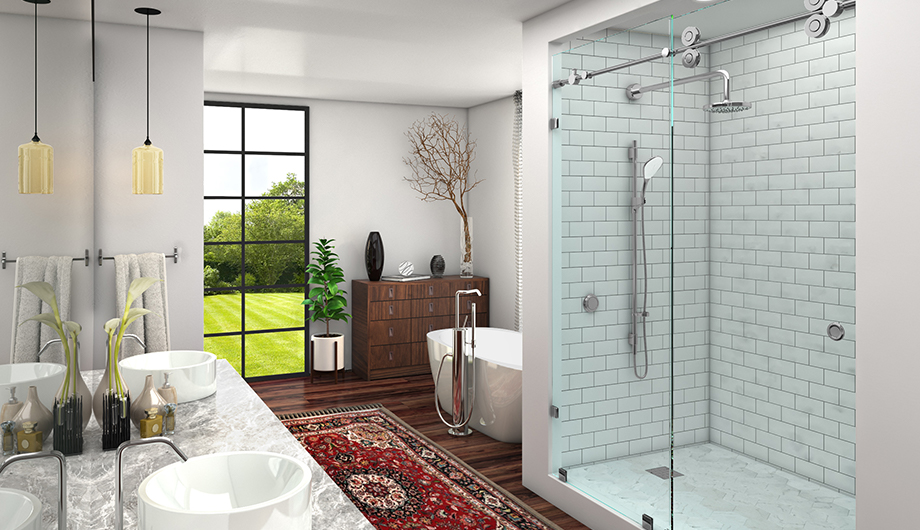
InGlass Digital Printing transforms glass into a true design surface, creating a finish that feels intentional and seamlessly built into the space.
Bring ideas to life with clarity, depth, and detail that standard materials simply can't achieve. From subtle texture to bold, eye-catching statements, InGlass adds dimension and personality to any application, elevating both interior and exterior environments across residential and commercial spaces.
Supported by HMI's nationwide network of glass professionals, your project is guided from concept to completion.
No minimums. No limitations. Just possibility.
HOW IT WORKS
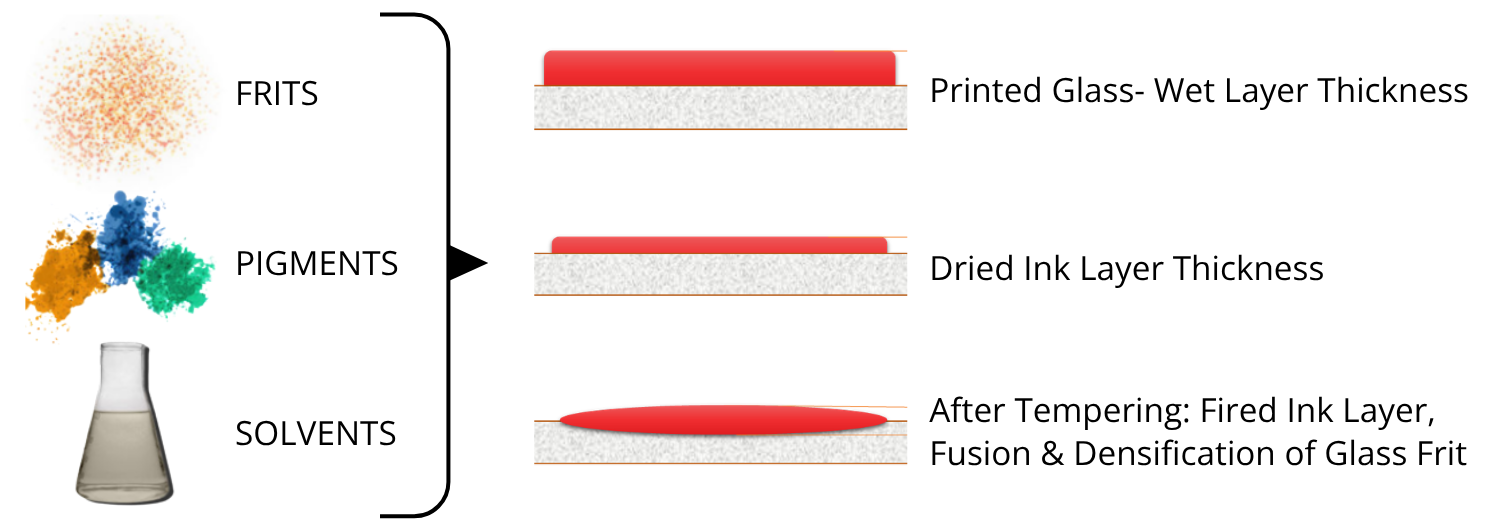
InGlass Digital Printing applies ceramic inks to the glass surface, which are then permanently fused into the glass during the tempering process. This creates a permanent bond between the design and the glass itself. Unlike traditional surface-applied printing methods, where ink remains on top of the glass, the InGlass process em-beds the design into the surface. The result is a high-resolution, durable finish that will not peel, fade, or wear over time, and is engineered for long-term performance in both interior and exterior environments.
Why InGlass?
Durability
The tempering process permanently fuses ink
into the glass, creating unmatched resistance
to scratching, UV fading, weather, and chemicals,
making it suitable for both interior and exterior use.
Accuracy
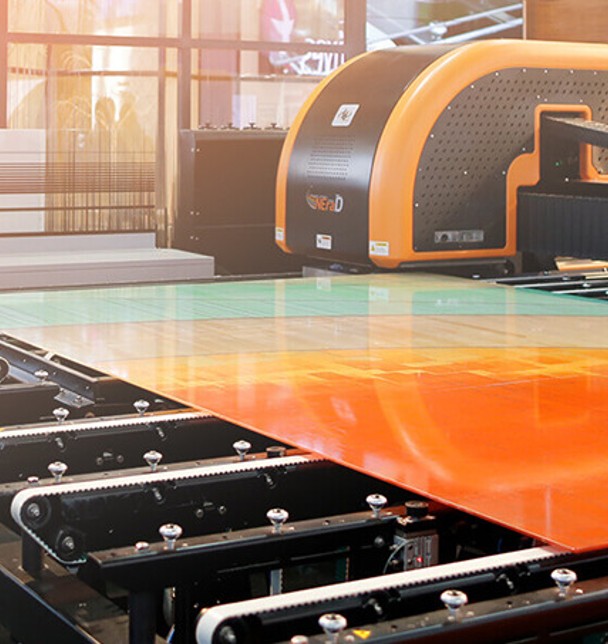
Advanced micro-drop printing technology delivers
highly detailed, photorealistic images with precise
control over color, opacity, and coverage, even across
large formats or multiple panels.
Sustainability
- Glass is fully recyclable
- Inks contain no heavy metals
- Supports LEED friendly applications
- Individual Panel replacement without full system replacement
- Digital storage eliminates physical inventory needs
| Digital Designs (InGlass) | Screen Printing | UV Printing | Vinyl Graphics | |
|---|---|---|---|---|
| Set Up Time | Low | Very Long | Low | Low |
| Fixed Costs | None | Extremely High | None | Low |
| Efficiency | Low to High Volume Identical & Custom |
High Volume for Identical Panels | Low Volume | Low to High Volume Varies by Design Method |
| Applications | Interior & Exterior | Interior & Exterior | Interior Only | Interior & Exterior |
| Multi-Color / Color Match | Yes | Very Limited Due to Cost Effectiveness | Yes | Yes |
| Customization | High | Low | High | Low–High |
| Reproduction | High | Low | High | High |
| UV / Acid / Humidity Resistance | High | High | Very Low | Varies |
| Scratch Resistance | High | High | Low | Varies |
| Print Stage | Before Tempering | Before Tempering | Tempering Not Required | Tempering Not Required |
Colors Built for the Extreme & Extraordinaire
Not all printing is created equal. Standard printers use organic inks that burn up instantly in high-heat environments. Our process is different. HMI InGlass Digital Printing utilizes a specialized BGWORK (Blue, Green, White, Orange, Red, Black) system with inorganic pigments capable of surviving tempering ovens over 1200◦F+. This ensures your designs remain permanent, legible, and safe under extreme conditions.
The science of high-temperature stability means some colors are chemically impossible to create. For instance, no magenta pigment exists that can survive these temperatures, which limits our ability to produce pinks, purples, candy colors, neon, or metallic finishes. Additionally, because we do not use standard RGB processes, exact digital color matching is not feasible, and variations may occur.
SEE IT BEFORE YOU BUY IT
We don't want you to guess. We offer free physical swatch samples so you can see exactly what our inorganic inks can do. Contact us today to receive your kit and choose the perfect high-performance color for your application.

Glass Selection & Color Impact
Standard Clear glass naturally contains a small amount of iron, creating a subtle green tint that can influence color appearance. For improved color clarity, Low-Iron glass is recommended, offering a brighter, more neutral result.
However, the choice between Clear and Low-Iron glass ultimately depends on your desired aesthetic, application, and project requirements.

Where InGlass Works
Designed for flexibility…nearly any glass application.
-
Showers
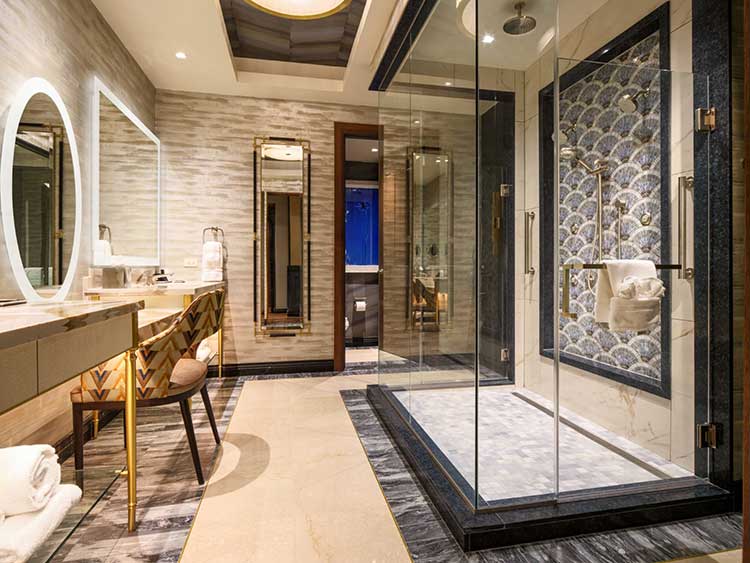
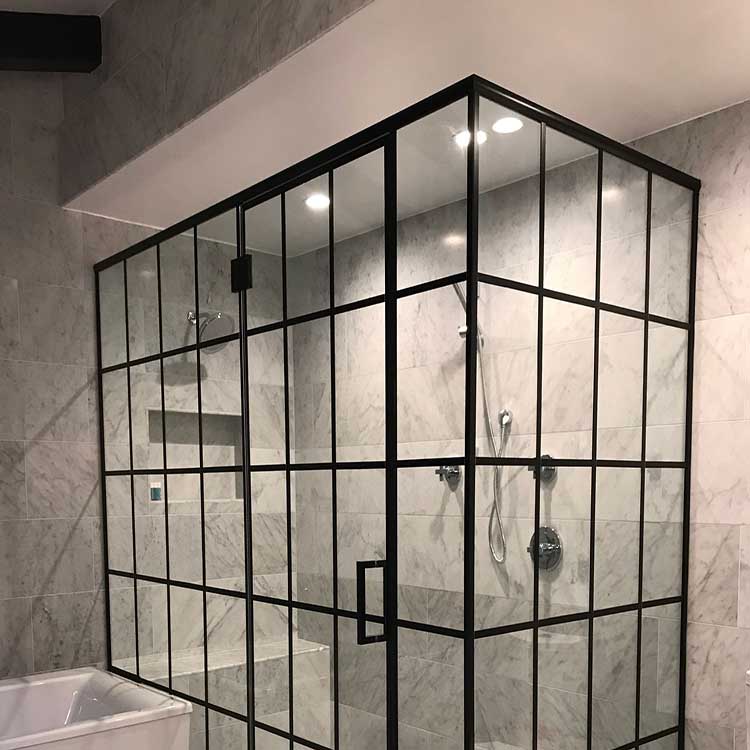
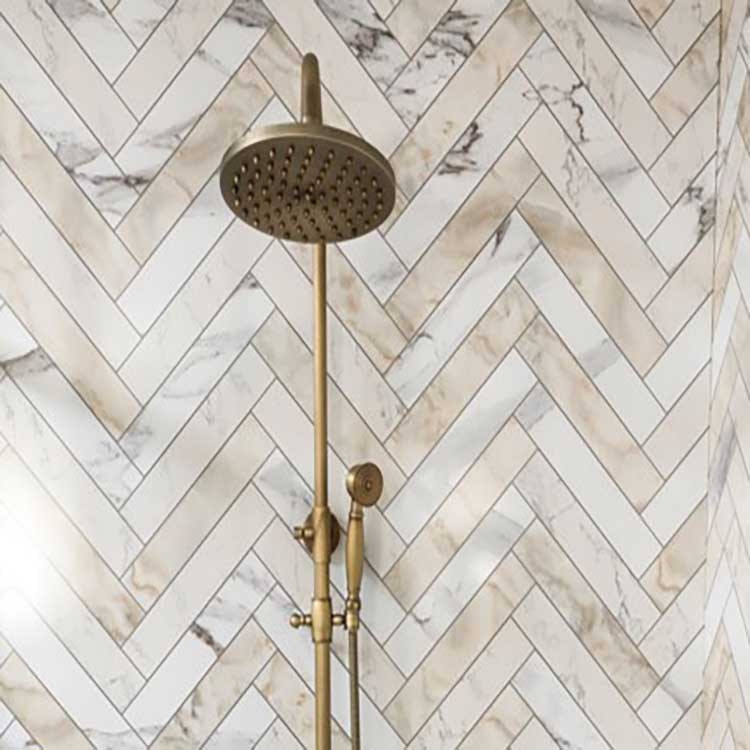
Create custom shower environments with privacy, pattern, or full-image designs that elevate the space while standing up to daily use.
Countertops & tabletops- Bring design to the surface with durable, non-porous glass countertops and tabletops that deliver consistent color, custom style, and a refined, easy-to-maintain finish.
-
Countertops & Tabletops
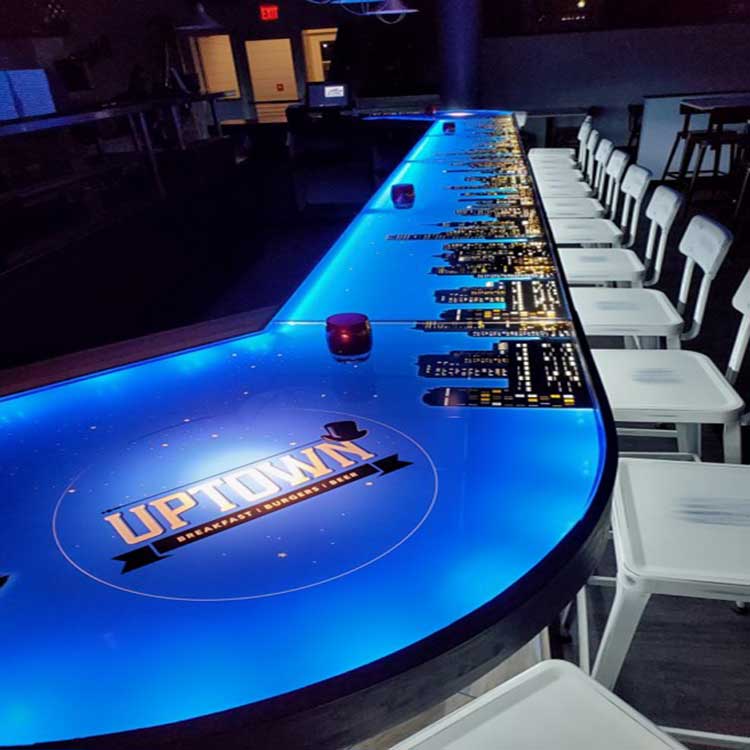
Bring design to the surface with durable, non-porous glass countertops and tabletops that deliver consistent color, custom style, and a refined, easy-to-maintain finish.
-
Backsplash
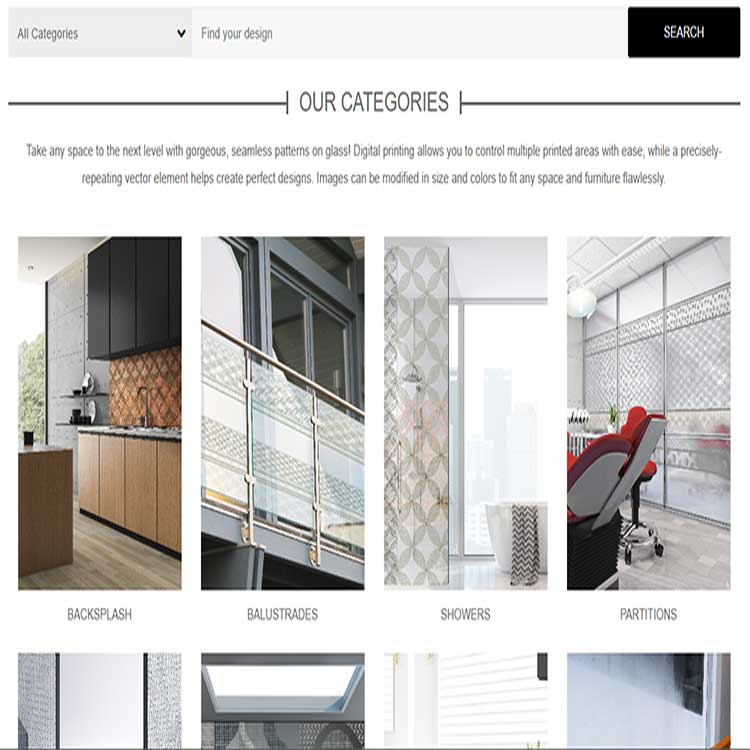
Upgrade backsplashes with a smooth, grout-free surface that introduces depth, color, or pattern while keeping maintenance simple. Wall+decor- Turn glass into feature walls, decorative panels, or statement pieces that add scale, texture, and visual impact to any space. windows- Add privacy, branding, or subtle design elements while preserving natural light and the openness of the space.
Resources
Download product guides, technical data sheets, and warranty documents.
Frequently Asked Questions
Click any question to expand the answer.
-
HMI InGlass Digital Printing uses advanced ceramic inks that are fused directly into the glass during the tempering process, creating a permanent image embedded within the glass surface.
This process differs significantly from UV surface printing, where ink is applied to the top of the glass after tempering. Surface printing can wear, scratch, or fade over time.
With InGlass Digital Printing:
- The result is a highly durable, scratch-resistant, and fade-resistant finish
- Designs maintain their appearance even in high traffic or exterior environments
- Because the print is permanently integrated into the glass, it delivers long-lasting performance and architectural-grade durability
-
HMI InGlass Digital Printing offers both design flexibility and long-term performance. Key benefits include:
- Exceptional Durability — Resistant to scratching, UV exposure, weather, and cleaning chemicals
- Permanent Design Integration — The image is fused into the glass and cannot peel or wear away
- Low Maintenance — Glass can be cleaned like any other tempered glass surface
- Unlimited Design Potential — Textures, gradients, patterns, imagery, logos, and custom artwork
- Architectural Versatility — Suitable for residential, commercial, and hospitality applications
This technology allows glass to function not only as a structural material, but also as a design element and visual focal point.
-
InGlass Digital Printing supports a wide range of interior and exterior architectural applications, including:
Residential Applications
- Shower Enclosures
- Backsplashes
- Decorative Glass Panels
- Doors and Partitions
- Furniture Surfaces such as Tabletops or Countertops
- Custom Artwork or Monograms
- Wall Art
- Railings
Commercial & Hospitality Applications
- Feature Walls
- Office Partitions and Room Dividers
- Restaurant or Bar Installations
- Branded Glass with Logos or Graphics
- Decorative Railings and Balustrades
- Hotel and Hospitality Design Elements
The flexibility of digital printing allows designers, architects, and homeowners to transform glass into custom design surfaces.
-
Because the ceramic inks are fused into the glass during the tempering process, the printed design will last as long as the glass itself. Unlike surface-applied inks, InGlass Digital Printing will not peel, fade, or degrade over time. The result is a permanent design embedded within the glass that can last for decades.
-
Printed glass can be cleaned using standard glass cleaning methods. Since the ceramic inks are fused into the glass surface, the printed design is not affected by common cleaning products or chemicals. Routine cleaning with non-abrasive glass cleaners or mild solutions will maintain the appearance of the glass without damaging the printed design.
-
Yes. InGlass Digital Printing can be used in laminated glass configurations when required for safety, structural, or design purposes.
-
Yes. InGlass Digital Printing can be used to influence:
- Light Diffusion
- Privacy Levels
- Solar Control
- Energy Performance
Through carefully designed patterns, gradients, and coverage levels, printed glass can be engineered to meet both design and functional requirements.
-
Because ceramic inks must withstand the high temperatures used during the tempering process, they rely on inorganic pigments. As a result, certain colors may appear slightly different compared to printed paper or digital screens.
Typical variations include:
- Reds may appear more brick or maroon
- Yellows may appear more mustard-toned
- Some purples and bright tones may appear more muted
HMI works closely with customers to set realistic expectations and ensure the final result aligns with the intended design.
Specifications
Technical details for InGlass Digital Printing.
-
- Maximum Size: 86" × 144"
- Minimum Size: 8" × 8"
Available sizes and thicknesses may vary based on stock glass at our Louisville, KY and Boston, MA facilities. Our team will help determine the best configuration for your specific application.
-
Printed glass can be viewed from either side; however, the design is intended to be viewed through the glass for the best appearance. The printed surface may show minor variations in gloss or sheen compared to the opposite side.
Designs will appear as a mirror image when viewed from the back side of the glass. For projects with text or numbers that must be readable from both sides, we offer a specialized "Double-Vision" printing method that allows the design to appear correctly from either side.
-
Not always. Because the inks must withstand the tempering process (over 1200°F), ceramic pigments are made from inorganic materials. Currently, there is no non-toxic equivalent for magenta used in Pantone color mixing, so some colors cannot be matched exactly and slight color variation may occur.
-
It is illegal to print copyrighted material, unless you have acquired proper licensing and/or written permission from the copyright holder.
-
Vector files can be scaled to any size without losing image quality because they are created using points, lines, and curves.
Raster files (such as photos, jpeg, png, gif, tiff, psd, etc.) are made of pixels, so resolution is important. Enlarging them too much can cause pixelation. As a general guideline, artwork should be at least 100 pixels per inch at final size. For example, a 72" × 60" panel would require a minimum image size of 7200 × 6000 pixels.
Explore All InGlass Solutions


CONTACT BY EMAIL
Need help? Send an email to cayti.renaud@hmiglass.com

CONTACT BY PHONE
Available Monday-Friday | 5 AM - 4:30 PM EST | 1-800-767-5954